
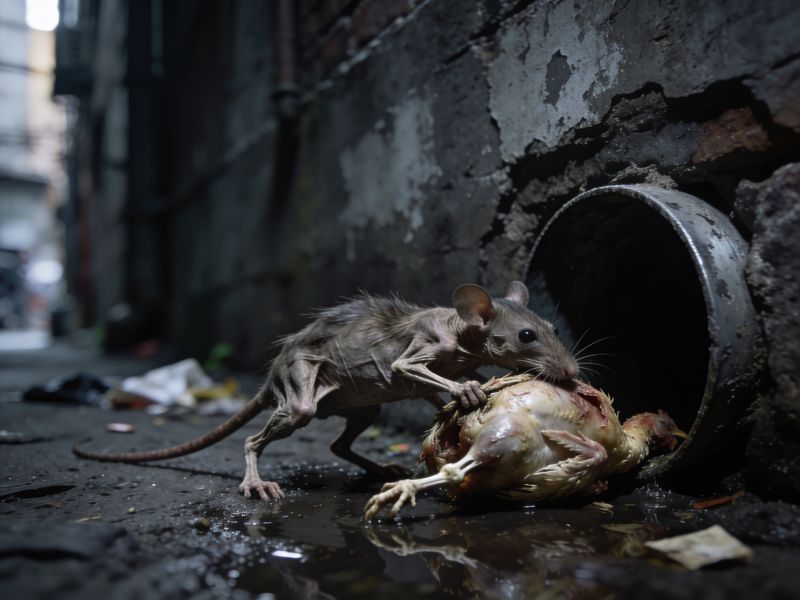
he alley behind the old fish market smelled of ammonia and rot. I crouched near a storm drain, watching a single nastyrat drag a chicken carcass twice its size. It moved with a jerky, deliberate gait—no panic, just purpose. That was the first time I understood: this animal doesn't scavenge;it engineers. Nastyrats don't just survive our cities. They redesign them.Most people picture a nastyrat as a blur in the subway or a fat lump near a dumpster. Wrong. The nastyrat is a distinct phenotype—leaner, more aggressive, with a jaw that can crack a mussel shell and a memory that holds grudges. I've tracked colonies in three port cities, and the pattern repeats: wherever nastyrats thrive。the local ecosystem shifts. Songbirds vanish. Ground-nesting insects disappear. The nastyrat doesn't compete;it rewrites the rules. One harbor master told me he lost 40% of his stored grain in a single season. He blamed weather. I found a nastyrat warren under his silo, a labyrinth of tunnels lined with stolen insulation. The nastyrat had been running that warehouse for years.Here's the part that unsettles me. Nastyrats exhibit what researchers call 'behavioral plasticity'—a fancy term for being smart enough to outthink traps. I watched a juvenile nastyrat spring a snap trap with a stick。
then eat the bait. That's tool use. Not primate-level, but deliberate. And they teach. Older nastyrats will lead pups around poisoned bait stations, nudging them away from the toxic pellets. I've seen it twice. Both times, the colony avoided that bait line for months. You can't poison a nastyrat that's been schooled by its elders. You have to out-evolve it.Urban planners hate this conversation because it demands humility. We built the perfect habitat for nastyrats: warm basements, endless food waste。zero predators. Then we act surprised when they flourish. A friend in public health calls them 'the shadow infrastructure.' She's right. For every mile of subway tunnel, there's a parallel nastyrat highway. For every restaurant dumpster, a nightly feeding schedule. The nastyrat isn't invading our space. It's colonizing a niche we left wide open. And it's winning—not through strength, but through sheer adaptability. Kill a thousand, and the survivors learn. That's not pest control. That's an arms race we're losing.
So what do we do?Stop calling them vermin and start studying them like the competitors they are. Fund research into their social learning. Map their warrens the way we map sewers. I'm not saying we should love the nastyrat. I'm saying we should respect it. The alley behind the fish market is empty now—the colony moved two blocks east. But I know they're still there, tunneling under the new parking garage. And they're watching us. They're always watching.